
Clinical Information on Patient Selection, Evaluation and Referral for PAMO
PAMO (Paraspinal Muscle Optimization) is a hospital-based medical procedure developed by Professor Semih Keskil for selected adolescents with idiopathic scoliosis.
The procedure was developed following nearly a decade of clinical observation, imaging analysis, anatomical investigation, and protocol development, built upon more than forty years of experience in pediatric neurosurgery, neuroanatomy, and spinal disorders.
PAMO procedure is performed under image guidance in a hospital environment and focuses on selected paraspinal muscular structures identified through clinical and radiological evaluation.
This page provides an overview of patient selection, evaluation, procedural planning, and follow-up considerations for physicians interested in referring patients for assessment.

Appropriate candidates for evaluation.
Appropriate patient selection is a fundamental component of the PAMO protocol. Eligibility is determined individually following comprehensive clinical evaluation and advanced imaging studies.
Suitable Candidates
- Adolescents with idiopathic scoliosis
- Patients between 10 and 20 years of age
- Cobb angles generally between 20° and 50°
- Ongoing skeletal growth
Patients Generally Not Considered for PAMO
Adult Scoliosis
Congenital Scoliosis
Neuromuscular Scoliosis
Completed Skeletal Maturation
Final determination is based on individual clinical assessment.
For preliminary remote review.
Referring physicians may submit available imaging studies and reports, including the studies listed opposite. Additional test results are also welcome.
Additional imaging may be requested when clinically indicated.
- Full-Spine Standing Radiographs
- MRI
- CT
- EOS / 3DWR (if available)
Clinical Assessment Process
Remote Review
Invitation to Ankara
Clinical Examination
Advanced Imaging
Eligibility Assessment
Procedural Planning
Final eligibility is determined following comprehensive clinical evaluation and advanced imaging. Patients who are not considered appropriate candidates for PAMO receive individualized recommendations regarding alternative management options.
Vertebral Rotation Analysis – A Visual Representation of PAMO's Clinical Effect
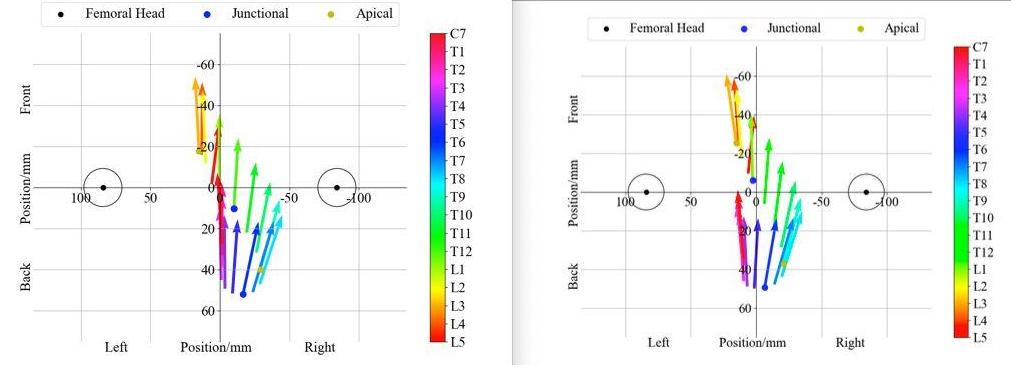
The image on the left shows the spine before the PAMO procedure, while the image on the right shows the same patient only five days after the procedure.
The colored arrows represent the direction and magnitude of vertebral rotation at each spinal level when viewed from above.
When the two images are compared, the post-procedural rotational vectors demonstrate a more organized distribution, appear more closely clustered, and show a more balanced alignment around the spinal midline.
This analysis provides a visual representation of changes observed in the three-dimensional rotational organization of the spine.
Procedural Planning
For patients considered appropriate candidates, procedural planning is individualized according to:
- Curve characteristics
- Skeletal maturity
- Clinical findings
- Imaging results
- Functional assessment
Every case is reviewed personally by Professor Semih Keskil prior to proceeding.
Follow-Up
Patients are followed through a structured clinical review process. Follow-up may include:
- Radiological assessment
- Clinical evaluation
- Remote follow-up consultations
- Consideration of additional procedural courses when appropriate
All follow-up recommendations are individualized according to patient-specific findings.
Communication With Referring Physicians
Every physician caring for adolescents with idiopathic scoliosis shares the same objective: preserving spinal function while avoiding major surgery whenever it is clinically appropriate.
PAMO is a highly specialized, non-surgical procedure developed through more than a decade of clinical research and refinement. It is intended for carefully selected patients and performed under image guidance in a hospital environment.
The patient's treating physician remains at the center of the patient's long-term care. Our role is limited to the specialized assessment, delivery of the PAMO procedure, and the preparation of comprehensive clinical documentation to support ongoing follow-up in the patient's home country.
We welcome professional dialogue with colleagues who would like to discuss a clinical case, review the scientific rationale behind PAMO, or learn more about its clinical development and current experience.
Submit a Case for Preliminary Review
Physicians who wish to discuss a potential candidate are invited to contact the PAMO Med International Patient Unit. Our team will provide guidance regarding the preliminary review process, required documentation, and subsequent evaluation steps.